

Ever returned from a conference buzzing with ideas, actions, and promises, only to get overwhelmed by the sheer volume of tasks ahead? I recently found myself in this exact position, flooded with actionable insights and conversations needing immediate follow-up. It’s easy to feel stuck—or worse, end up busy but ineffective. Let me share a simple yet transformative process I've adopted using voice notes, AI, and the Eisenhower Matrix to bring clarity and effectiveness to my post-conference overwhelm.
What is the Eisenhower Matrix?
The Eisenhower Matrix was developed by U.S. President Dwight D. Eisenhower, who faced an enormous number of decisions and tasks daily, especially during his leadership as Supreme Commander of the Allied Forces during World War II. Eisenhower understood the importance of clearly distinguishing between what was urgent and what was important, famously stating, "What is important is seldom urgent, and what is urgent is seldom important." This clarity helped him allocate his attention efficiently, directly contributing to his effectiveness both in wartime and as president.
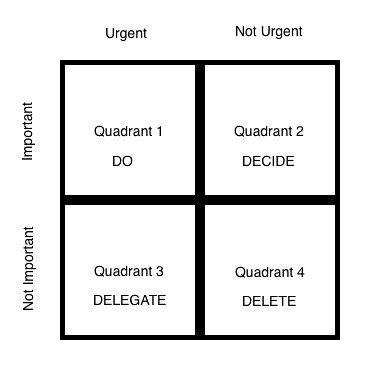
The Eisenhower Matrix categorizes tasks into four clear quadrants:
Quadrant 1 (DO – Urgent & Important): Tasks you should tackle immediately.
Quadrant 2 (DECIDE – Important, Not Urgent): Schedule these tasks strategically to prevent crises.
Quadrant 3 (DELEGATE – Urgent, Not Important): Delegate or handle swiftly with minimal personal involvement.
Quadrant 4 (DELETE – Neither Urgent nor Important): Minimize or eliminate these activities.
Step 1: Capture Your Thoughts Immediately
After key meetings or events—like my recent experience at the APEC conference—I quickly record my thoughts using the Apple Voice Notes app. This simple step captures insights while they're fresh, ensuring important nuances aren’t lost in translation.
Step 2: Harness AI to Process Transcripts
Voice Notes conveniently converts spoken words into transcripts. I then copy these into an AI-powered language model (like ChatGPT, Claude, or any other LLM solution you might prefer). Here's a powerful yet simple prompt to guide your AI tool:
"Given this transcript, summarize the key insights, categorize all mentioned tasks and insights into an Eisenhower Matrix, and clearly separate tasks into four quadrants: DO (Urgent & Important), DECIDE (Important but Not Urgent), DELEGATE (Urgent but Not Important), and DELETE (Neither Urgent nor Important). Provide each task clearly under these headings, and suggest any additional actionable insights based on the content."
Step 3: Take Action with the Eisenhower Matrix
By having your AI tool automatically sort your thoughts into this framework, you transform a flood of ideas into a clear, actionable plan.
Why This Method Works
This approach helps you focus on the right activities, ensuring you prioritize actions aligned with your purpose and long-term goals. The voice notes capture your authentic insights, and AI effortlessly categorizes and clarifies them, empowering you to act intentionally rather than reactively.
Reflection & Your Next Step
Try this process yourself:
Record thoughts immediately after your next significant meeting or event.
Transcribe and input them into your preferred LLM solution using the Eisenhower Matrix prompt above.
Immediately act on Quadrant 1 (DO), strategically plan Quadrant 2 (DECIDE), delegate Quadrant 3 (DELEGATE), and ignore Quadrant 4 (DELETE).
Have you tried a similar AI-driven method, or do you have another strategy for post-conference task clarity? Share your experiences—I’d love to hear what's working for you!
Happy prioritizing,
Shaune